


If AI Is Answering Your Customers, Does SEO Still Matter?
SEO (Search Engine Optimization) helps your content rank in traditional search results. AEO (Answer Engine Optimization) helps your content get cited as the direct answer inside AI-generated responses from platforms like ChatGPT, Perplexity, Gemini, and Google AI Overviews. They are not competing strategies; they are complementary layers of the same visibility system.
Small and mid-sized businesses are watching something alarming unfold in their analytics: rankings hold steady, but traffic is quietly declining. The reason isn't a penalty or a technical issue. It's a behavioural shift. Users are getting answers directly on the results page and never clicking through. Our team at Gallea Ai works with SMBs across financial services, food and beverage, professional services, and e-commerce, and this pattern is the first thing we identify in every AI readiness audit we run. With 15+ years of combined experience in search strategy, we've built our practice around one principle: if AI systems can't read your content and cite it as a source, your business is invisible to a growing segment of your audience, regardless of where you rank.
What You Need to Know Before Reading Further
- AEO and SEO are not interchangeable. SEO focuses on ranking for traditional search queries; AEO focuses on being selected as the cited answer in AI-generated responses.
- Zero-click searches now account for 65.4% of all Google queries. Your ranking position no longer guarantees a visit.
- Brands cited in AI Overviews receive 35% more organic clicks than brands that are not cited and a 91% higher paid CTR.
- AI-referred visitors convert at 4.4x the rate of traditional organic visitors, with fewer clicks and dramatically higher quality.
- Strong SEO is the prerequisite for AEO. AI systems favour trusted domains with established authority before they extract answers from them.
- GEO (Generative Engine Optimization) is the third layer, which goes beyond being the direct answer to becoming a source that AI models synthesize and reference across multiple outputs.
What Is the Core Difference Between SEO and AEO?
SEO optimizes your content so search engines rank your page. AEO optimizes your content so AI systems extract and cite a specific passage from your page as the direct answer to a user's question.
Both strategies serve visibility, but they target fundamentally different surfaces. SEO drives users to click your link in search results. AEO positions your content to be the answer that appears before anyone sees the list. According to research from Semrush, 77% of ChatGPT users in the USA treat it like a search engine. When those users ask a question, they read one synthesized answer, not a ranked list of ten pages. If your content isn't structured to be that answer, your business doesn't exist in that moment.
The technical gap between the two strategies is real:
- SEO prioritizes keyword targeting, backlinks, domain authority, page-level technical optimization, and content depth to earn rankings in Google's index
- AEO prioritizes structured data markup, conversational question-and-answer formatting, answer-first paragraph structure, entity clarity, and schema markup, all to make specific passages extractable by AI systems
- The shared foundation is E-E-A-T (Experience, Expertise, Authoritativeness, Trustworthiness). Both strategies require it, but AEO demands that it be demonstrated at the sentence level, not just the page level
How Do Traditional Search Rankings and AI Answer Selection Diverge?
Traditional search ranks the best page. AI search selects the best answer, and those are often pulled from different parts of a domain, or from entirely different pages than the ones Google ranks #1.
This distinction has direct implications for content strategy. When someone searches "hotel in Williamsburg, Brooklyn," a traditional search engine evaluates your full page for relevance, authority, and comprehensiveness. When someone asks an AI the same question, the system breaks the query into smaller sub-questions, finds the most precise passage that addresses each one, and synthesizes a response from multiple sources. Your best-ranking page may never be cited, but a detailed FAQ buried on a subpage might be the exact chunk the AI pulls.
The data illustrate how significant this divergence has become:
| Platform | Citation Rate from Top Search Results |
| Google AI Overviews | 77% of answers cite pages from Google's top 10 results |
| Bing Copilot | 70% of answers sourced from Bing's top 20 results |
| ChatGPT Search | 87% of citations match Bing's top 20 results |
| Perplexity AI | 60% of cited answers are from Google's top 10 results |
Source: Semrush AEO vs SEO research
This data confirms that authority still matters; AI systems lean heavily on trusted domains. But it also shows that citation is not guaranteed by ranking alone. Content must be structured for chunk-level retrieval: each section should stand on its own, answer one question clearly, and signal its own relevance to an AI that reads in passages, not pages.
Why Is Your Traffic Dropping Even When Your Rankings Haven't Changed?
When AI Overviews are present in search results, the click-through rate for the #1-ranked page drops by 58%. Users read the AI summary and move on without clicking anything.
This is the zero-click phenomenon, and it is not a temporary disruption. Similarweb data shows that zero-click searches rose from 56% to 69% of all Google queries between May 2024 and May 2025, a 13-percentage-point increase in 12 months. According to an analysis of 68,879 real queries, users clicked on a result only 8% of the time when an AI summary appeared, compared to 15% without one. Only 1% of users clicked on sources cited within an AI Overview.
The implication for SMBs is stark. An informational article that once drove consistent organic traffic from a #1 ranking now faces a 58% CTR reduction the moment an AI Overview appears above it. According to Bain & Company, overall organic traffic is declining 15–25% across many sectors as a direct result of AI-generated results. Gartner projected that traditional search engine volume would drop 25% by 2026 due to AI chatbots and virtual agents.
The counterintuitive finding is this: being cited inside an AI Overview reverses the trend entirely. Brands cited inside AI Overviews see 35% more organic clicks and 91% more paid CTR than non-cited brands. AEO is not about fighting zero-click search; it is about being the brand that benefits from it.
What Is the Core Difference Between SEO and AEO in Online Marketing?
In online marketing, SEO builds your organic search presence through keyword rankings, backlinks, and technical site health. AEO builds your AI presence through structured answers, entity clarity, and schema markup, so AI systems select your content when users ask questions rather than typing search queries.
Most marketing teams treat these as the same activity. They are not. SEO measures success through keyword rankings, organic traffic, and click-through rates from search engine results pages. AEO measures success through AI brand mentions, citation frequency, share of voice inside AI responses, and AI referral traffic. The user journey is different at every stage:
- SEO user journey: User types a query → sees a ranked list → decides which link to click → visits a page → converts
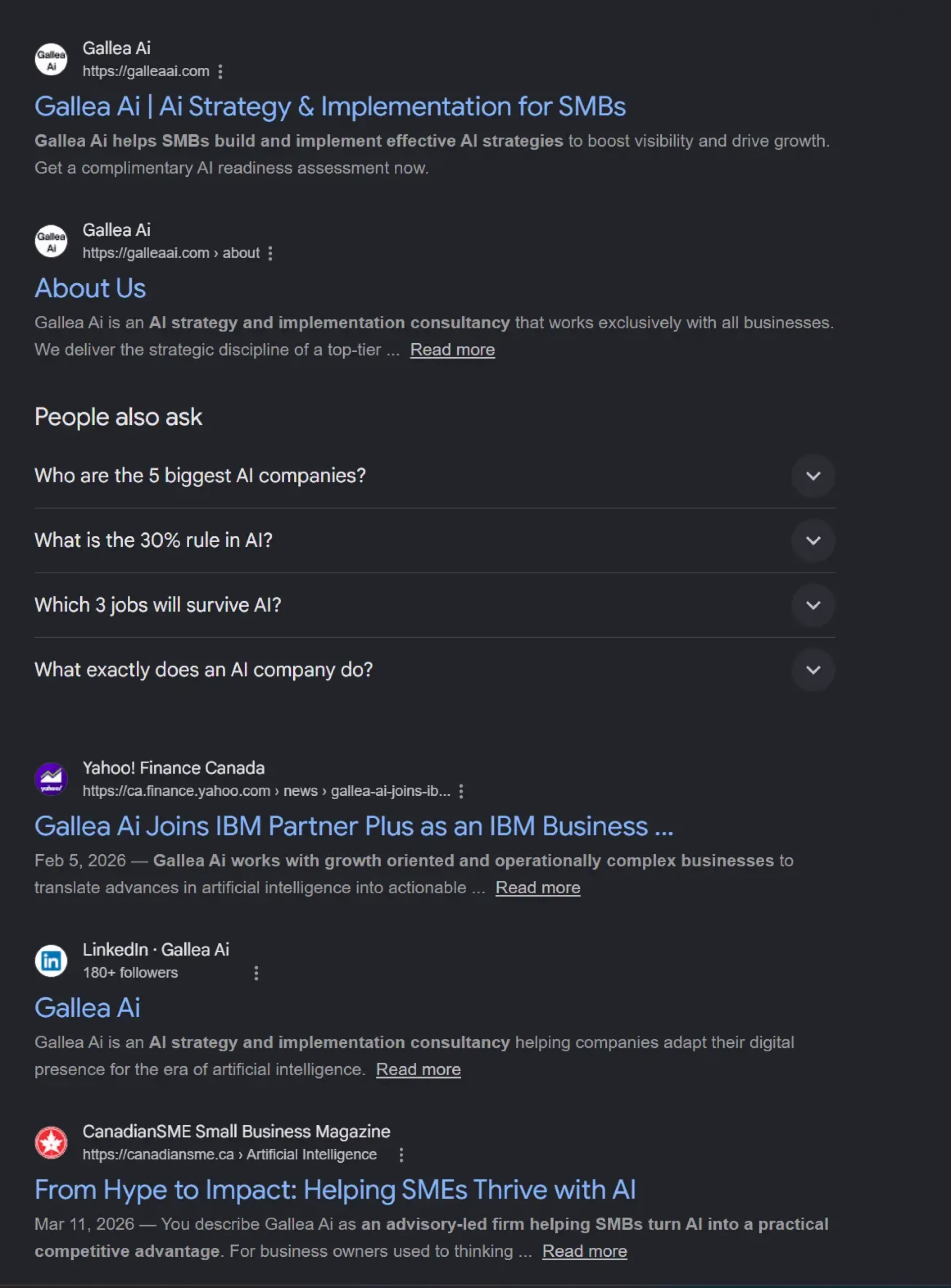
- AEO user journey: User asks a question → reads a synthesized AI answer → sees your brand cited as the source → arrives pre-convinced → converts at 4.4x the rate of a traditional organic visitor
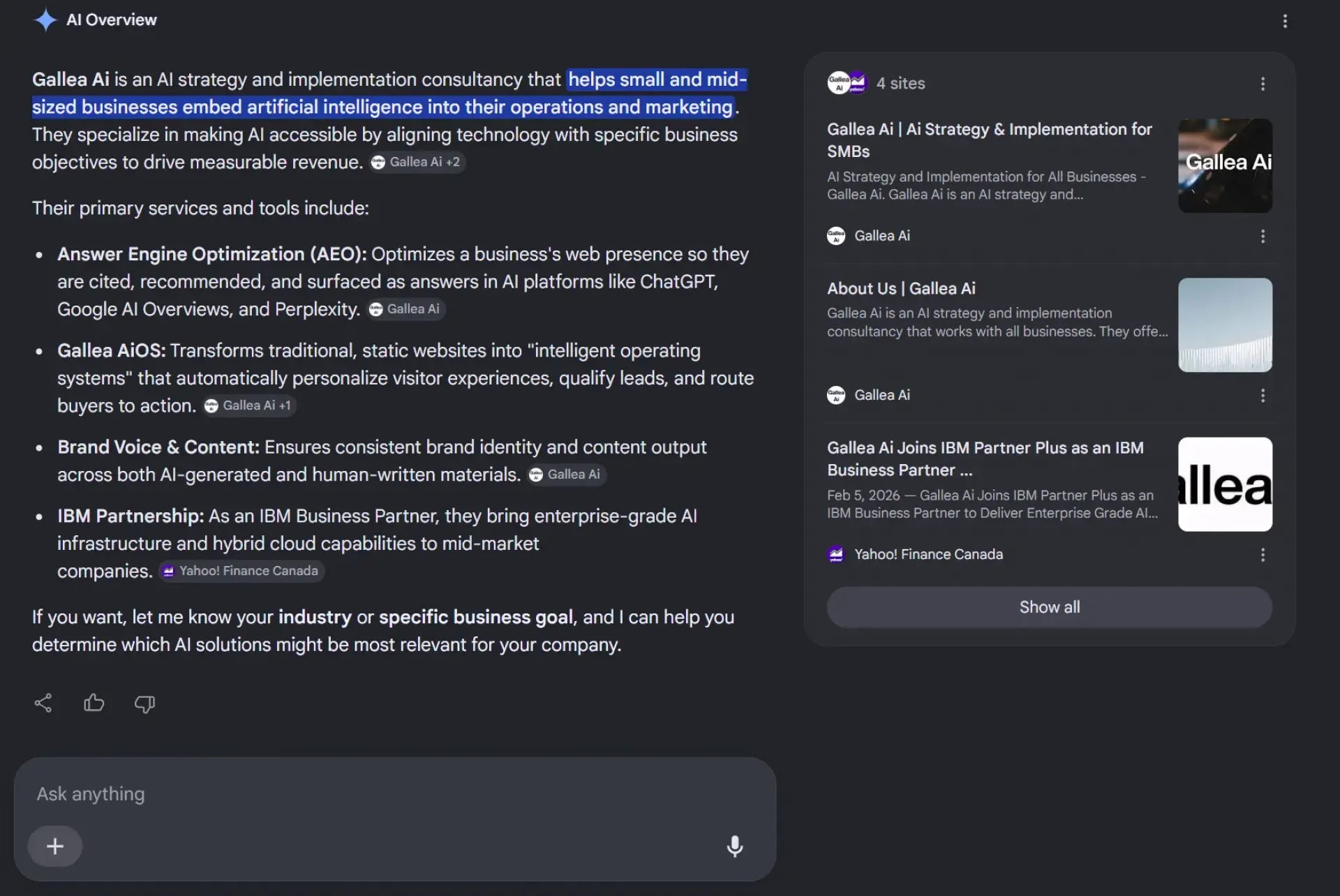
When our team audits a client's AI visibility, the gap between their SEO performance and their AEO performance is almost always the same issue: well-written content that never explicitly answers the question the reader came to ask. The page ranks because it covers the topic. But it doesn't get cited because it never delivers a clean, extractable answer in the first two sentences of each section.
How Does AEO Compare to SEO in Driving Website Traffic?
AEO drives less raw traffic volume than SEO in most scenarios, but the traffic it generates converts at dramatically higher rates. SEO is a volume play. AEO is a quality play.
The numbers tell the story clearly. Research from Ahrefs shows that AI search visitors convert at 23x the rate of regular search visitors. Semrush data confirms that AI-driven traffic achieves a 4.4x higher conversion rate than traditional organic traffic. AI-referred users also stay 8% longer on-site, visit 12% more pages, and bounce 23% less than traditional organic visitors. These visitors arrive having already read an AI-generated answer that cited your brand as a trusted source; they are not browsing. They have already made a preliminary decision.
SEO still drives the majority of organic traffic for most SMBs today. AI search platforms account for approximately 4.3% of total search volume as of mid-2026, with a 340% year-over-year growth rate. At that trajectory, AI search could account for more than 10% of all queries by 2027. Businesses that build AEO infrastructure now will capture a disproportionate share of that high-converting traffic as the shift accelerates. The businesses that wait will face a much harder content rebuild under competitive pressure.
This is exactly what we observed working with a financial services client. Their existing SEO foundation, built on technical excellence and authoritative content, gave us the starting point. We layered AEO-specific work on top: restructuring existing articles with answer-first paragraphs, implementing FAQ and Article schema markup across their blog, and building a structured data framework that explicitly answered the questions their target audience typed into AI platforms. Within five months, they recorded a 581% increase in organic traffic, 961% growth in first-page organic impressions, 78 first-page keyword rankings, and $90,665 in attributed revenue.
When Should You Prioritize AEO Over SEO, and Vice Versa?
Prioritize AEO when your target queries are conversational, question-based, or informational. Prioritize SEO when targeting transactional or navigational queries, where users still click through to compare options.
The intent signal determines the strategy. Zero-click rates vary significantly by query type, and understanding that distribution helps allocate resources effectively:
- Informational queries (definitions, how-to, comparisons): 74–82% zero-click rate AEO priority
- Navigational queries (brand name searches, specific site lookups): 68% zero-click rate; both AEO and SEO matter
- Local queries (near me, location-specific): 72% zero-click rate. Local schema and AEO are critical
- Commercial investigation (comparisons, best-of lists): 46% zero-click rate blend of AEO and SEO
- Transactional queries (buy, pricing, checkout): 31% zero-click rate; SEO still drives most value here
For SMBs with limited resources, the practical framework is: use SEO to own transactional demand, use AEO to dominate informational queries in your category, and build both simultaneously for commercial investigation queries. The mistake most SMBs make is treating AEO as optional until their traffic falls. By that point, AI-visible competitors have already captured the answer slots for the category's most important questions.
How to Build a Combined AEO and SEO Content Strategy
The most effective approach treats SEO as the access layer and AEO as the extraction layer. SEO gets your domain trusted and indexed. AEO gets your specific content pulled into AI answers.
Here is how to build a dual-layer content strategy that serves both:
- Audit your existing content for answer gaps. Identify your top-performing SEO pages. For each one, ask: Does this page directly answer the primary question it targets within the first two sentences of each section? If not, rewrite the opening of each H2 as an explicit, citable statement. AI systems prioritize content where the answer appears before the explanation.
- Structure every page for chunk-leve l retrieval. AI systems do not read pages; they extract passages. Each section of your content should stand alone as a complete answer to one question. Use descriptive H2 and H3 headings phrased as questions. Keep answer paragraphs under 60 words. Follow with supporting detail. This structure satisfies both the featured snippet algorithm for SEO and the passage extraction model used by LLMs for AEO.
- Implement FAQ and HowTo schema markup in JSON-LD. The FAQ Page and HowTo schema are the two highest-impact schema types for AEO success. They make your question-and-answer content machine-readable, explicitly telling AI systems which part of your page answers which question. Use JSON-LD format. Validate with Google's Rich Results Test before deploying. Never mark up content that does not appear on the visible page.
- Build entity clarity into every piece of content. AI systems identify brands, products, and concepts through entity recognition. Use your brand name and product names consistently and explicitly, especially near key claims. Define your category. "AI strategy consultancy for SMBs" is more machine-readable than "we help businesses gro w with AI." Connect related entities with supporting vocabulary: industry terms, service names, and partner organizations, such as our IBM Silver Business Partner credential.
- Earn authority signals that serve both strategies. Backlinks from authoritative domains improve traditional SEO rankings. Unlinked brand mentions across trusted sources increase the likelihood of AI citations. LLMs rely heavily on brand references in text to determine which sources qualify as authoritative. Digital PR, expert commentary, guest contributions, and co-branded content all build the cross-domain mention profile that AI systems treat as a trust signal.
- Allow AI crawlers access through your robots.txt. Confirm that GPTBot, Google-Extended, Claude, PerplexityBot, and BingBot are not blocked in your robots.txt file. An AEO strategy is irrelevant if the AI systems you are optimizing for cannot crawl your site.
- Publish original data and first-hand experience. Both search algorithms and LLM training pipelines prioritize content that brings something to the table that AI alone cannot generate: real case studies, primary research, expert observations, and tested results. This is why E-E-A-T compliance is not optional for AEO; it is the mechanism by which AI systems decide whether to trust your content enough to cite it.
We tested this approach with a food and beverage client. Their challenge was hyperlocal: a multi-location business losing foot traffic to AI-driven recommendations that favoured competitors. We focused their AEO work on conversational local queries, the exact phrasing people use when asking a voice assistant for a recommendation. We implemented the Speakable schema, restructured their location pages to include explicit Q&A content that answers the most common decision-stage questions, and built supporting FAQ content that mapped to voice search intent patterns. The result: a 20% increase in walk-in customers, with 58% of new customers citing voice search and AI assistant discovery as the reason for their visit. The business achieved 15+ first-page voice-query rankings during the campaign window.
What Is AEO vs SEO vs GEO: Understanding the Full Spectrum
SEO earns you a place in the ranked results. AEO earns you the direct answer slot. GEO (Generative Engine Optimization) earns you inclusion as a source that AI models synthesize and reference when building original responses.
These are not three different strategies; they are three surfaces within one integrated visibility system. The distinction matters because the content requirements diverge at each level:
| Dimension | SEO | AEO | GEO |
| Goal | Rank in search results | Be selected as the direct answer | Be synthesized into AI-generated responses |
| Output | Ranked links on SERPs | Featured snippets, voice answers, AI citations | AI-generated summaries, LLM outputs |
| Content Style | Comprehensive and keyword-structured | Concise and question-driven | Insightful and idea-driven |
| Success Metric | Rankings, organic traffic, CTR | AI citations, answer appearances, brand mentions | Influence on AI narratives, LLM reference frequency |
| Primary Platforms | Google, Bing | Google AI Overviews, voice assistants, Perplexity | ChatGPT, Claude, Gemini, Perplexity |
For most SMBs, a practical sequencing applies: invest in SEO first to build the domain authority and indexed content that AEO and GEO depend on. Authoritative domains are the ones AI systems draw from. Without that foundation, AEO and GEO tactics produce limited results. As the SEO foundation matures, layer in AEO with structured answers and schema markup. Then advance to GEO by producing original research, frameworks, and expert content that AI models reference when generating category-level responses.
What Content Formats Win in AI Answers vs. Blue-Link Results?
AI systems prefer short, structured, answer-first content with clear headings, bullet points, and explicit definitions. Traditional search still rewards comprehensive, long-form content, but only when it also contains scannable structure.
The format gap between SEO and AEO is most evident in the way opening paragraphs are written. Traditional SEO content often opens with context-setting and a gradual build-up to the main point. AEO-optimized content opens with the direct answer in the first two sentences, then expands with supporting details. AI systems extract the answer-first version. They skip the build-up.
Formats that perform best for AEO extraction:
- Short definition paragraphs (40–60 words) that directly answer the section heading
- Bullet lists for comparisons, criteria, and feature breakdowns. AI systems prioritize structured information over prose for citation
- Numbered step lists for processes HowTo schema maps directly to this format
- Q&A formatted sections with explicit question headings followed by a direct answer
- Speakable content blocks for voice assistant retrieval clearly answered, under 30 seconds when read aloud
For traditional blue-link SEO performance, these formats still apply, but supplemented with:
- Long-form depth that covers the topic comprehensively to satisfy keyword intent
- Internal linking structures that build topical authority across clusters
- Multimedia content (images, video embeds) that improves dwell time and engagement signals
The practical guidance is to write in the AEO format: first, direct answers, clean structure, and short paragraphs, then expand each section with the depth that SEO rewards. You do not need two versions of the same content. You need one piece of content that opens every section with an AI-extractable answer and then delivers the depth that earns the ranking.
How Do Keyword Intent and Query Types Differ Between AEO and SEO?
SEO targets keywords, the specific phrases users type to find ranked pages. AEO targets intents the questions users ask when they want an immediate answer, often conversational and voiced rather than typed.
This distinction shapes content architecture. An SEO keyword like "best CRM for small business" signals that the user wants to compare options; they will click through to read reviews. An AEO query like "what CRM should a small business use if they have under 10 employees" signals that the user wants a direct recommendation; they are asking AI, not browsing. The same business category, but a fundamentally different content requirement.
How to identify AEO-priority queries:
- Begins with "what," "how," "why," "when," or "which"
- Sounds like something you would say out loud to a voice assistant
- Expects a single clear answer rather than a list of options to evaluate
- Matches a specific use case, scenario, or decision point, not a general topic
How to identify SEO-priority queries:
- Transactional phrasing ("buy," "pricing," "near me")
- Navigational intent (brand name + type of page)
- Commercial comparison ("X vs Y," "best X for Y") where the user wants to read multiple perspectives
- High search volume with clear SERP real estate and limited AI Overview presence
AEO also requires content that aligns with natural conversational language, the way people speak rather than type. Voice search queries tend to be 4-6 words longer than typed queries and use a full-sentence structure. Content that answers typed keyword variations alone will miss the growing volume of voice and AI-mediated search.
How Does Measuring AEO ROI Differ from Measuring Traditional SEO Performance?
Traditional SEO is measured through rankings, organic traffic, and click-through rates. AEO ROI is measured through AI citation frequency, brand mention share-of-voice in AI responses, and the conversion rate of AI-referred traffic, which converts at 4.4x the rate of traditional organic.
Most GA4 setups are not configured to capture AI referral traffic as a distinct channel. The first step in measuring AEO performance is ensuring that traffic from Perplexity, ChatGPT, Gemini, and other AI platforms is visible as a named referral source rather than lumped into "direct" or "other." Once that data is isolated, the quality differential becomes visible immediately.
Key AEO metrics to track:
- AI brand mentions and citation count: How often your domain is cited as a source across ChatGPT, Perplexity, Google AI Overviews, and voice assistant responses
- AI share of voice: What percentage of AI-generated answers in your category reference your brand versus competitors
- Featured snippet ownership: the most trackable proxy for AEO performance in traditional tools, since AI Overviews frequently draw from featured snippet content
- AI referral traffic quality: Conversion rate, session duration, pages per session, and bounce rate segmented by AI referral source
- First-page keyword rankings under AEO-structured content: Traditional rank tracking remains relevant as a leading indicator of AI citation likelihood
For SMBs without dedicated AI visibility tracking tools, start with three data points: organic CTR by query type (segmented between queries that trigger AI Overviews and those that do not), referral traffic from known AI platforms, and conversion rate comparison between AI referral sessions and standard organic sessions. That baseline makes the ROI case visible before any additional investment in tooling.
What Tools Support Both AEO and SEO Workflows?
The best tool stack for combined AEO and SEO work covers four functions: technical SEO auditing, keyword and intent research, schema validation, and AI visibility monitoring.
No single platform fully covers all four functions. A practical SMB tool stack:
For technical SEO and keyword research:
- Google Search Console: the authoritative source for impressions, CTR by query, and AI Overview appearance data
- Google's Rich Results Test: validates schema markup before deployment
- Ahrefs or Moz: domain authority, backlink analysis, keyword rankings
For schema and structured data:
- Schema.org documentation: the canonical reference for JSON-LD type selection
- Schema Markup Validator: validates schema.org compliance beyond rich results
- JSON-LD generators for FAQ, HowTo, Article, and Organization schema
For AI visibility monitoring:
- Track referral traffic from ai.com, perplexity.ai, chatgpt.com, and gemini.google.com in GA4
- Monitor brand mention frequency in AI responses by querying target prompts in ChatGPT, Perplexity, and Gemini directly
- Google Search Console's AI Overview filter (available in Performance reports) shows which queries are triggering AI Overviews that include your content
As an IBM Silver Business Partner, Gallea Ai integrates enterprise-grade AI infrastructure into our client audit and implementation workflow, giving SMBs access to AI analysis tools that would otherwise require enterprise contracts and data science teams.
How Must Content Strategy Adapt for Generative AI Search?
Content strategy must shift from page-level thinking to passage-level thinking. AI systems do not read your website; they extract, evaluate, and cite individual chunks of text. Every section of every page must be independently answerable, credible, and clearly attributed.
Three structural shifts define the generative AI content adaptation:
From keyword coverage to entity authority. Traditional SEO rewards pages that cover a keyword thoroughly. Generative AI rewards entities, brands, people, products, and concepts that are consistently defined and referenced across multiple trusted sources. Build your content around your brand's owned definitions of its methodology and services. Make those definitions consistent across every page, social profile, and external mention.
From link equity to citation equity. Backlinks remain important for domain authority, and domain authority remains the baseline filter AI systems use before selecting content for citations. But AI systems also weigh unlinked brand mentions, editorial references in authoritative publications, and the consistency of factual claims across sources. A brand mentioned in ten trusted publications without a link is more AI-visible than a brand with ten backlinks from low-authority sources.
From content updates to content freshness as an AI signal. Both search algorithms and LLM training pipelines have a documented preference for recently updated, factually current content. Regular content audits, updating statistics, refreshing examples, and removing outdated references are not just SEO maintenance. They are AEO maintenance. Stale content is less likely to be cited. A visible "last updated" date on articles is a minor trust signal that costs nothing to implement and pays forward with every AI crawl.
What Are Your Next Steps for Building AI Visibility?
The companies winning in AI search right now are not the ones with the biggest budgets. They are the ones that started restructuring their content for AI extraction twelve months ago, before zero-click rates crossed 65%. The gap between AEO-optimized content and standard SEO content is widening every quarter, and the citations going to early movers are compounding.
The path forward is clear: audit your current content for AEO gaps, implement schema markup where it is missing, restructure your highest-traffic pages for answer-first extraction, and build a monitoring system that captures AI referral traffic as a named channel. None of this requires abandoning your SEO investment; it requires extending it into the layer where AI systems operate.
To assess exactly where your business stands in AI search today and identify the highest-ROI moves available to you, book a free 30-minute AI readiness consultation with Gallea Ai no obligation, no sales pitch. Our team will review your current AI visibility, identify the specific structured data and content gaps that are limiting your citation potential, and provide a prioritized action plan tailored to your industry and competitive landscape.